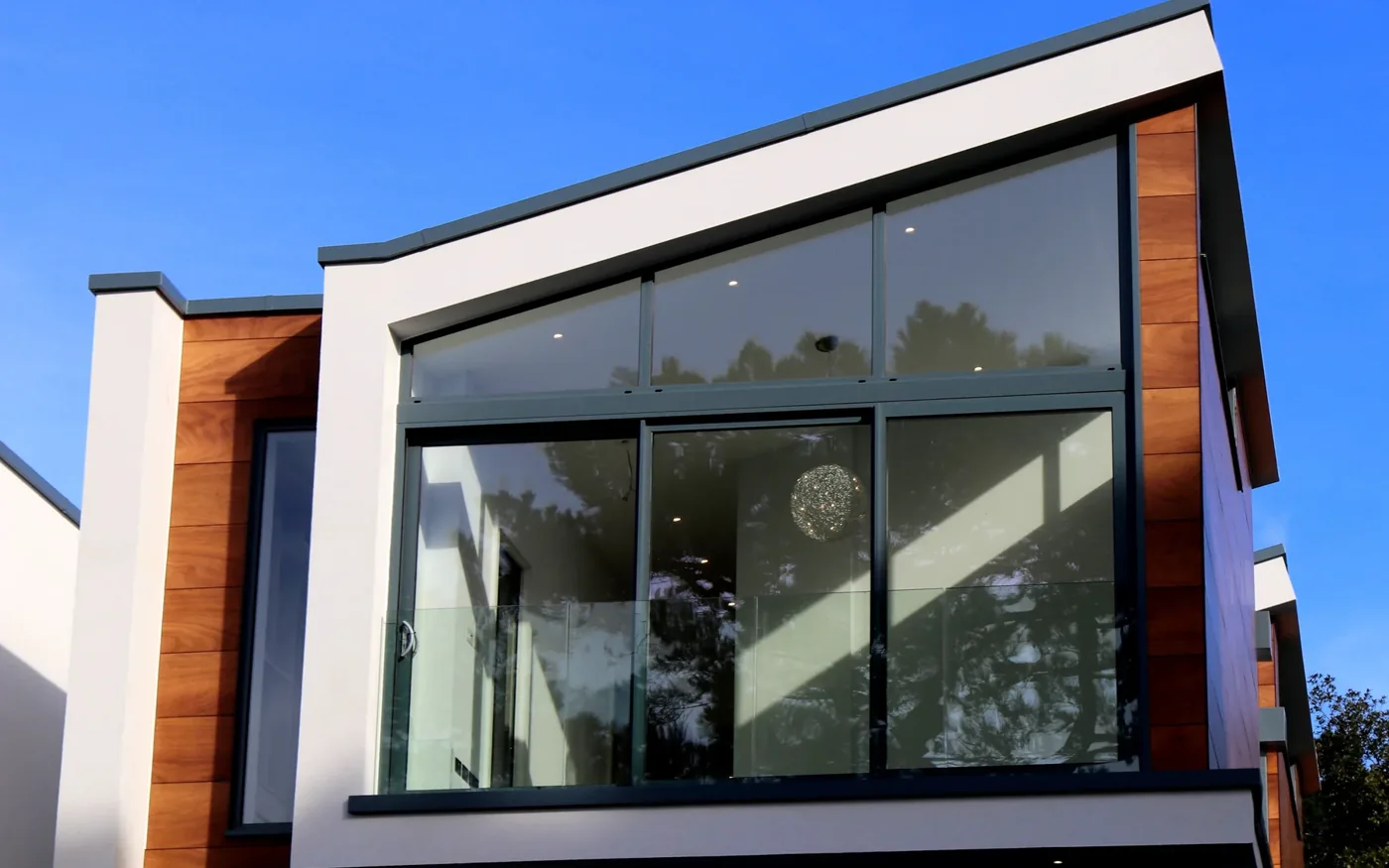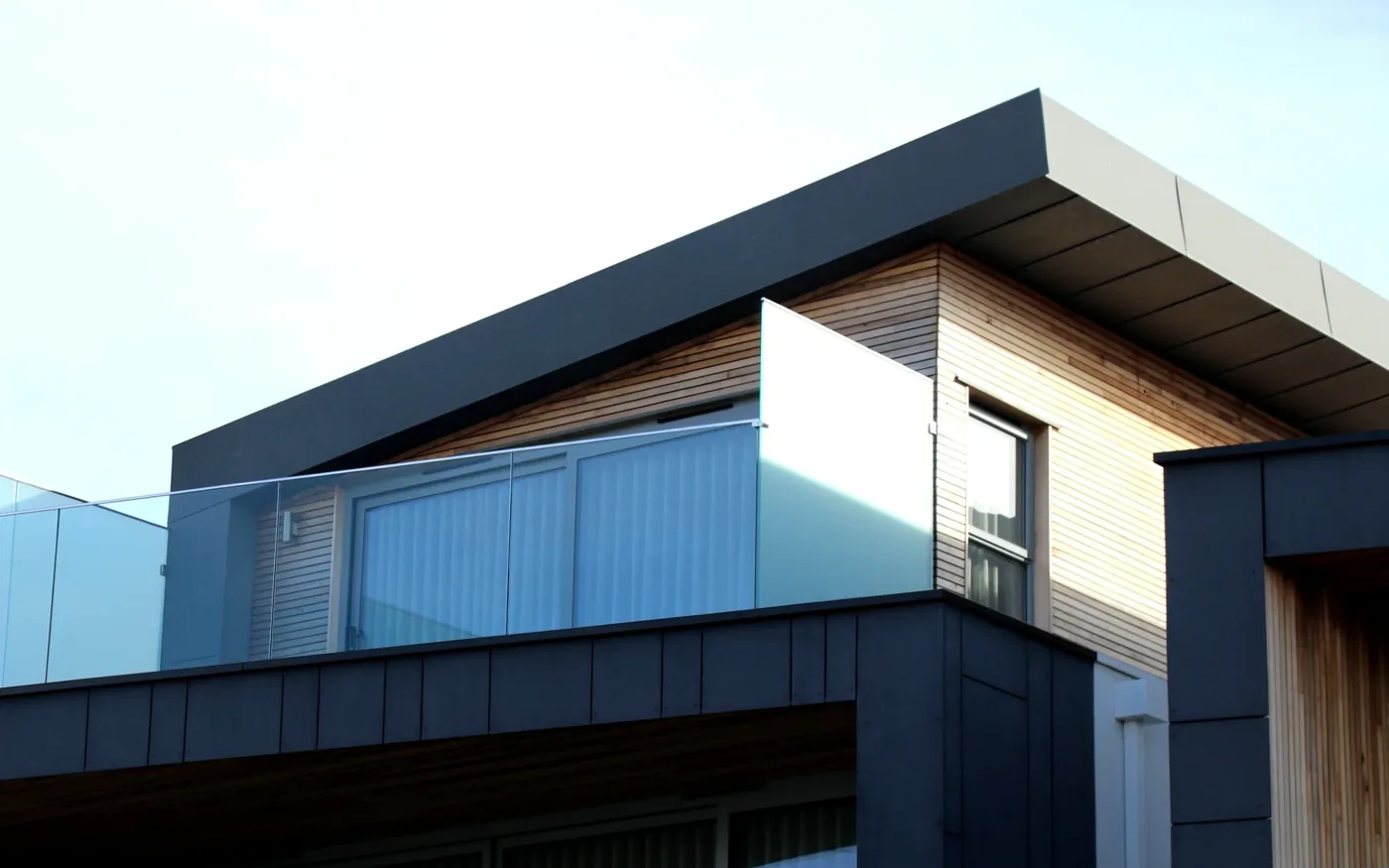
A well-insulated house can still become too warm when heat entering or generated inside exceeds the heat that can leave. Insulation is one part of the building’s performance; summer comfort also depends on solar exposure, internal gains and the means of removing excess heat.
Separate winter heat retention from summer comfort
A low heating demand does not describe how every room will behave during warm weather. Ask the design team to explain the summer assessment alongside the energy-performance work, including the assumptions made about occupation and the use of openings.
This matters when choosing the overall house arrangement. A bedroom under a roof, a glazed living space and a room on a shaded elevation may need different attention, even though they share the same general insulation specification.
For low-energy home construction, describe comfort priorities throughout the year. The brief should explain how the rooms will be used, rather than define performance only through an insulation thickness or heating-system choice.
Identify where heat enters and accumulates
Solar gain through glazing is an important consideration, but it is not the only input. People, lighting and appliances also contribute heat within the dwelling. The assessment needs assumptions appropriate to the intended use of the house.
Ask which rooms have been identified as more sensitive and why. That makes it easier to understand whether a proposed change concerns the layout, shading, glazing or another part of the design.
A useful comparison should show the effects of the options being considered. Reducing a window, adding external shading and changing the means of ventilation are different design choices with different implications for appearance and use. Thermal mass also affects how quickly rooms warm up and cool down: materials that absorb heat during the day need suitable conditions for releasing it later. It is not a substitute for controlling excessive heat gains.
Make the heat-removal arrangement easy to use
The government’s Approved Document O questions and answers explain overheating guidance for new residential buildings in England. Passive measures and the usability of the intended approach need consideration within the relevant assessment.
Ask how the proposed house releases excess heat under the conditions assumed in the design. Night ventilation may help rooms release accumulated heat when outdoor conditions are suitable, but the openings must be usable. Consider security, external noise and whether a restricted opening provides sufficient ventilation. For example, a ground-floor bedroom may not be able to rely on leaving an accessible window open overnight. The assessment should reflect the arrangement that occupants can reasonably use, rather than assume every window is fully open.
The design discussion should also distinguish routine ventilation from any additional provision relied on for overheating. An energy-efficient ventilation system is not automatically a complete answer to every summer-comfort question.
Carry the assessed choices into the build
Record the features relied on in the assessment so that they remain identifiable in the specification. A substitution during construction may need review if it changes those features or their operation.
- Which rooms and occupancy assumptions were assessed?
- What limits unwanted heat gain?
- How is excess heat removed in practice?
- Which design choices must be retained or reassessed?
The handover information should explain the operation of the installed arrangements. This connects the design intent with everyday use and gives the owner a clearer understanding of how the low-energy house is intended to perform through warmer weather.